
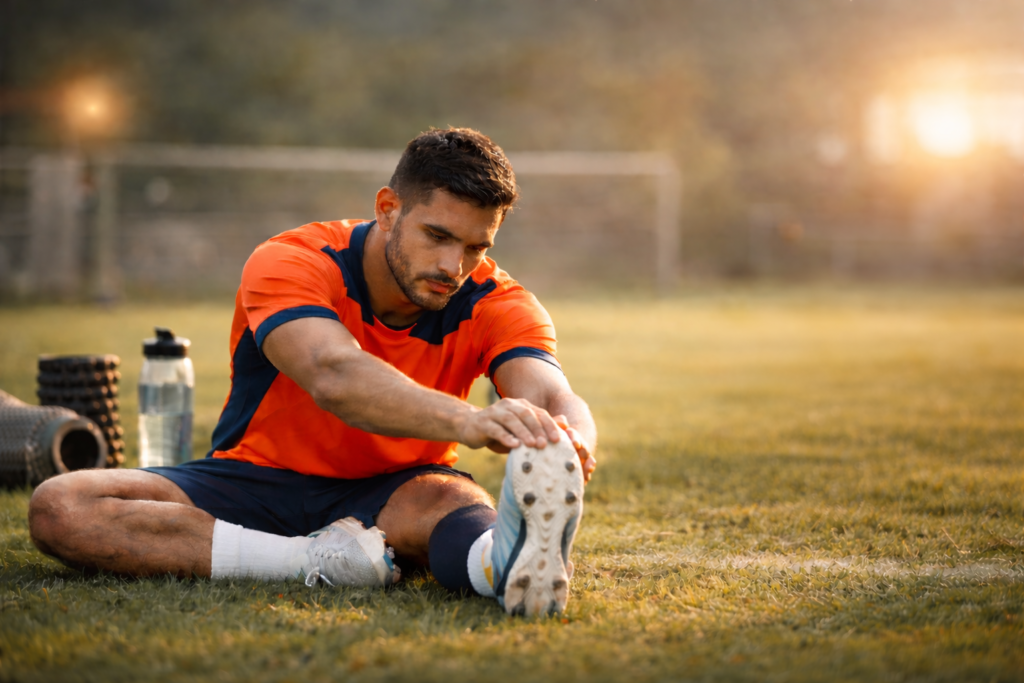
With the Indian Super League set to begin on February 14, the margins between preparation and performance grow finer.
Across all levels of football, from the ISL to the ongoing Goa Professional League, clubs are increasingly focused on recovery and restoration to keep players performing at their best. Sporting Clube de Goa, currently sitting second after 12 matches behind table-toppers Clube de Salgaocar in the state league, faces the same demands, where managing training loads and recovery is just as critical as chasing results.
Matchday physio routine: From pre-game to post-game
Matchday at Sporting Clube de Goa follows a clear physio-led process focused on preparing players to perform and protecting them throughout the game.
Pre-game routines begin with individual check-ins, where players are assessed for discomfort or concerns. This is followed by mobility checks, strapping or taping where required, and quick treatments. The physio team also guides the warm-up, ensuring proper activation and sprint preparation. A final check before kick-off ensures players feel confident and physically ready.
“During the match, the emphasis is on injury management and pitch-side assessment. Immediate decisions are made on whether a player can continue or needs to be substituted, prioritising player safety and long-term health,” says Artura Domanda da Costa, Sports Physiotherapist at Sporting Clube de Goa.
Post-game, the focus shifts to recovery where players undergo cooldown routines, hydration protocols, and early recovery measures with any impact injuries assessed immediately, and follow-ups planned before the next training session. Also, match workloads and incidents are logged to help update each player’s weekly recovery and training plan. The goal is to complete the cycle of preparation, protection, and recovery.
Managing performance in Goa’s adapting conditions
Goa’s weather presents additional challenges for players. The club adapts its approach to ensure performance levels remain high.
Hydration is monitored closely, with increased electrolyte intake and more frequent wellness checks in response to changing weather conditions. Warm-ups are extended to reduce muscle tightness, while recovery protocols become stricter, focusing on ice baths, mobility work, and proper cooldowns.
The emphasis is on adjusting training and recovery plans to suit the conditions while keeping players fresh, confident, and ready to perform.
Recovery habits before big matches
Before major fixtures, Sporting Clube de Goa players rely on simple and effective recovery habits.
Quality sleep, proper hydration, and basic stretching and mobility routines form the foundation. Many players complete a short mobility activation session either the night before or on matchday morning. This helps them feel loose, calm, and physically prepared, especially under Goa’s demanding playing conditions.
Supporting youth and academy player development
The same principles that guide match preparation at the senior level are introduced much earlier within the club setup with an integral focus laid on building awareness and good habits.
Players of the youth academy are taught proper warm-ups, basic strength training, hydration, nutrition, and the importance of recovery after training. They also follow lighter versions of senior team screening and conditioning routines, helping them understand how to take care of their bodies over the long term.
“Our young players train regularly with the first team and are given early exposure to competitive environments,” says Nicholas Albuquerque, administrator of Sporting Clube de Goa.
With Sporting Clube de Goa youth players gaining valuable exposure in competitions such as the RFDL, this foundation ensures they are physically prepared for higher levels of football. The objective is to help them become independent, consistent, and capable of transitioning safely into senior football.
Building a resilient squad culture
Over the course of a long season, squad culture is shaped by how players train, recover, and respond to setbacks. Consistent routines around preparation and recovery help establish shared standards and expectations within the group.
Within this structure, the physio team supports players through injury prevention, workload management, and rehabilitation. Injured players remain part of the squad throughout recovery, with progress monitored and setbacks managed carefully as part of the wider training process.
By treating recovery as part of a wider process rather than an individual setback, the environment encourages accountability and consistency. It helps build a squad that is better prepared to manage physical demands and push through challenges together.