
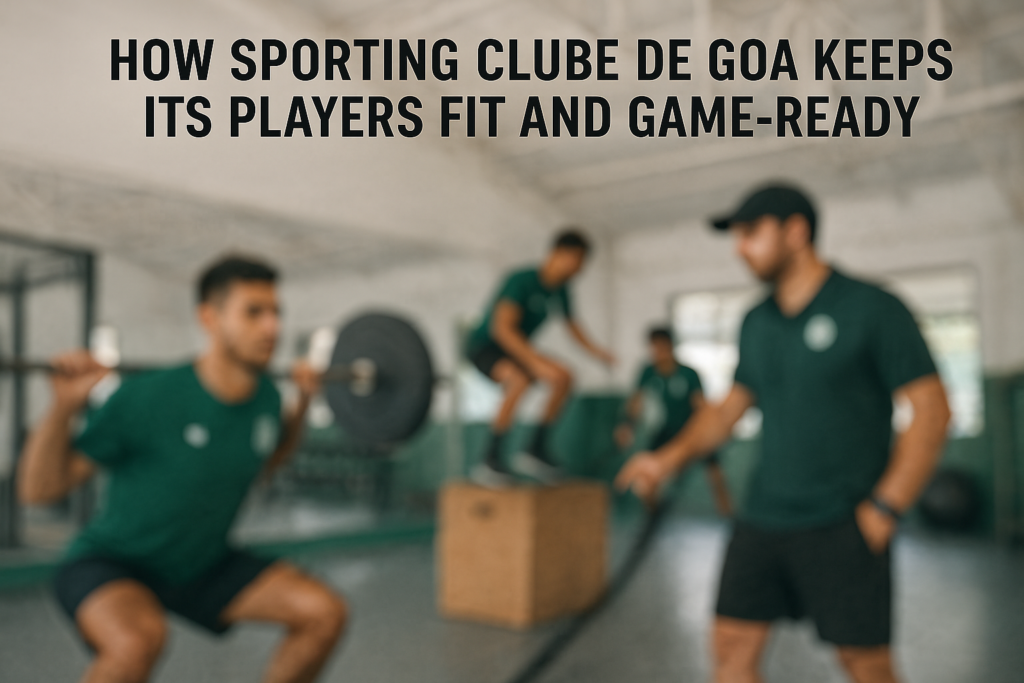
At Sporting Clube de Goa, player fitness and injury management are systematic and preventative in nature. The idea is simple: understand why injuries happen, find the risks early, and fix them before they become a problem. Sports Physiotherapist at Sporting Clube de Goa, Artura Domanda da Costa, shares insights into how the club follows a structured and scientific approach to athlete care throughout a long league season.
Teams often lose key players not in the 90 minutes of play, but in the unseen hours of training and recovery that surround it. Fans see the goals, the saves and the celebrations, but the quiet battles that win games long before kickoff often go unnoticed:- the sore muscles, the data reports, the strength screens, and the recovery plans unfolding behind closed doors.
At Sporting Clube de Goa, this process begins by studying what causes injuries, including the mechanism and which body parts are most commonly affected. The staff then works on identifying risk factors such as muscle weakness, tightness, fatigue, or excessive training load. Prevention forms the heart of the strategy through strength training, mobility work, proper warm-ups, and controlled load progression. Weekly monitoring helps detect early warning signs and adjusting programs based on athletes’ progress ensure improvements are consistent and measurable.
Artura explains, “We start the pre-season screening process with functional movement assessments, mobility and flexibility assessments, muscle strength tests, and previous injury profiles as a way of mapping the risk factors of each player. This is a foundation for fitness and rehabilitation programs.”
Throughout the season, the team maintains a close check on weekly training load, RPE Rating of Perceived Exertion, wellness and soreness levels, nutrition, sleep, and hydration to avoid sudden spikes in workload.
Injury prevention is integrated directly into training sessions through hamstring strengthening, core and hip stability exercises, neuromuscular control drills, balance training, structured warm-ups and personalized plans for players who are more vulnerable to injury. Attention is also given to external factors such as surface condition, cool-down quality, and proper protective gear. When recovering athletes return to play, clear RTP criteria guide decisions, supported by strength ratios, functional tests, and attention to psychological readiness, including fear of re-injury.
The Role of Data and Tracking
When asked how technology and monitoring tools shape her work, Artura emphasizes their central role.
“Data drives almost every decision I make on a daily basis with the players. I track their session loads, RPE, hydration, sleep and recovery scores to understand how each player is responding to training.” She explains that this helps identify early signs of fatigue, adjust workloads, and plan recovery or preventive programs. Data provides clear guidelines to progress safely when a player is returning from injury. “I keep myself updated using data from evidence-based literature and sometimes use it practically so that players get the best and updated support,” she adds.
What Makes Sporting Clube de Goa’s System Unique
Artura believes the strength of the medical and recovery setup lies in a unified structure. “What makes our medical and recovery setup at Sporting Clube de Goa different is how integrated and athlete-centered it is,” Artura says.
Artura explains,”We do not just treat injuries; we track players daily, understand their workloads, and adjust their programs. The physios, strength and conditioning coach, and coaches work as one unit, so decisions are fast and individualized.” She highlights that the club focuses on preventive screening, load monitoring, hands-on care, and players get consistent follow-ups, clear communication, and structured return-to-play pathways that create trust and keep them available for the season. “It is personal, proactive, and tightly coordinated.” she further adds.
Common Injuries and Preventive Approaches
Old paras- Hamstring strains, ankle sprains, and groin or adductor injuries are the most frequent issues encountered at the club due to sprinting demands, rapid direction changes, and repetitive kicking. Preventive strengthening through Nordics, calf-ankle stability drills, and hip–core strengthening for groin control. Warm-ups and cool-downs receive special emphasis. Structured dynamic warm-ups prepare the body, while static stretching and relaxation support recovery. Closely monitored weekly workloads prevent sudden increases in high-speed running or overall volume.
Equipment, footwear, and pitch conditions are reviewed to limit external risks, while internal risks are addressed through strengthening imbalances, improving mobility, managing fatigue, and understanding injury history.
New paras- Hamstring strains, ankle sprains, and groin or adductor injuries are the most frequent issues encountered at the club due to sprinting demands, rapid direction changes, and repetitive kicking.
The medical and training staff actively reduce these risks through preventive exercises like Nordics, calf-ankle stability drills, and hip–core strengthening for groin control. Warm-ups and cool-downs receive special emphasis with structured dynamic warm-ups preparing the body for action and static stretching and relaxation supporting recovery.
“My recovery wasn’t easy, but staying patient, doing my rehab, following good guidance, and prioritising rest helped me return fitter and more confident. The process made me stronger both physically and mentally and reminded me to be grateful for the game!,” says Joyner Lourenco, a defender at Sporting Clube de Goa, reflecting on his recovery journey.
Weekly workloads are closely monitored to prevent sudden increases in high-speed running or overall training volume. The team also checks equipment, footwear, and pitch conditions to limit external risks and manage internal risks by strengthening muscle imbalances, improving mobility, monitoring fatigue, and tracking each player’s injury history.
Coordination with Coaching Staff
“The coordination with the coaching staff is continuous and data-driven: every morning, we share quick updates on a player’s physical status, wellness, and recovery. We review RPE trends and rehab updates, so the coaches know exactly who needs load reduction, modified drills, or extra recovery,” Artura says.
In back-to-back matches and during high intensity periods, risks are assessed by identifying the players at risk of reaching a state of fatigue or leading to injury problems and suggest modifications-shorter time, limited high-speed work, or controlled technical sessions.
“It is also important as a physio to monitor their warm-ups and cool-downs, making sure the athlete is well prepared for training and recovers well from intense loads.” she concludes.
Football may be played in ninety minutes, but it is won in the hours of preparation, recovery, and disciplined training that happen behind the scenes. By prioritising prevention, recovery, and teamwork across departments, the club keeps more players fit, available, and ready to deliver their best on the pitch.